 GBP Autopilot
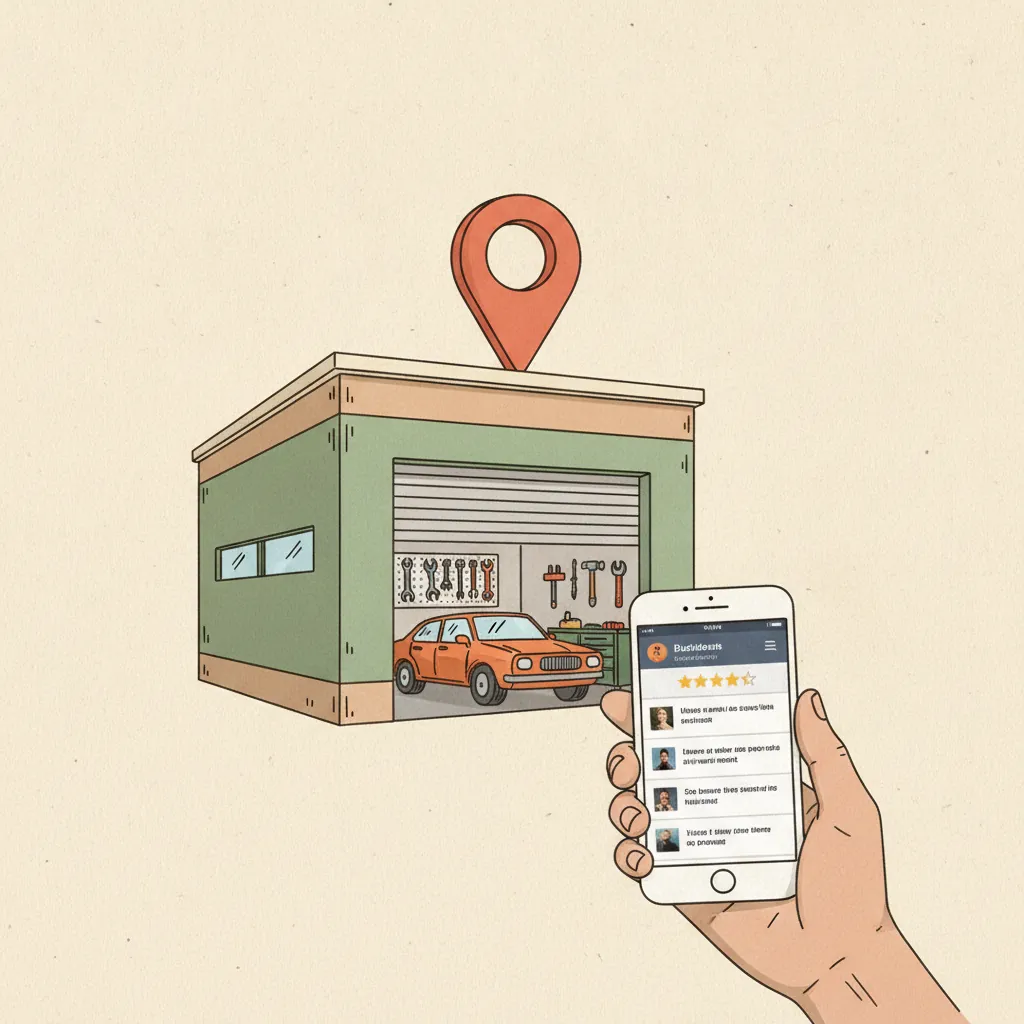
Auto repair is one of the most Google-driven local service categories in existence. When a check engine light comes on, when brakes start grinding, when someone needs a state inspection before a road trip — the first thing they do is search. "Auto repair near me." "Oil change [city]." "Brake repair [neighborhood]."
The shops that show up in the top three results of Google Maps get the overwhelming majority of those calls. The ones that don't are invisible to customers who are actively ready to spend money.
Most auto repair shop owners think of marketing as ads — Google Ads, Yelp ads, maybe a Groupon. But the highest-ROI marketing investment most shops can make costs nothing in media spend: it's building a dominant Google Business Profile backed by a steady flow of verified customer reviews.
This guide covers practical auto repair marketing ideas, with a focus on what actually moves the needle on local Maps visibility.
The Auto Repair Customer Decision: How They Choose a Shop
Auto repair customers are in a state of mild to moderate stress. Their car is making a noise, or a light is on, or they need something done before a trip. They want:
- A shop that appears trustworthy (reviews)
- A shop that's close (proximity)
- A shop that's available now (hours, response time)
Google Maps satisfies all three signals simultaneously. A shop's star rating, review count, distance, and hours are all visible in the local pack before the customer clicks anything. This is why Google Business Profile optimization is the most impactful marketing lever for auto repair shops — not paid ads, not social media, not direct mail.
According to BrightLocal's Local Consumer Review Survey 2026, 97% of consumers read reviews for local businesses. 47% won't use a business with fewer than 20 reviews. For auto repair — a high-trust purchase — the threshold is arguably higher.
For a deep-dive on the full local SEO picture, see local SEO for auto repair.
Marketing Idea #1: Turn Every Completed Job Into a Google Review
This is the single highest-ROI marketing action available to most auto repair shops. It costs almost nothing and compounds over time.
The typical shop sees 10–30 service completions per day. If even 10% of customers left a review after a well-timed ask, that's 1–3 new reviews per day — 400 to 1,000+ new reviews per year. That review volume, maintained consistently, puts most shops in the top tier of their local market within 6–12 months.
The key is removing friction. Most satisfied customers intend to leave a review and forget. Two things close that gap:
A verbal ask at pickup. When the customer comes in to collect their vehicle, the service advisor or owner says: "If you were happy with the work, a quick Google review means a lot to us — it helps people in the neighborhood find a shop they can trust." That framing (community benefit, not corporate marketing) lands authentically.
A post-visit SMS. Sent within 2 hours of vehicle pickup. One text, one link, one ask. The link should go directly to your Google review form — not your website, not a landing page, the actual review form. That direct link eliminates every extra tap between the customer's intention and their review submission.
TCPA compliance: If you're texting customers, you need explicit written opt-in collected when they first bring in their vehicle (on the repair order or check-in form), STOP/HELP keywords in every message, and no texts outside 9 a.m.–9 p.m. local time.
No review gating: Send the request to every customer who opted in — not just the ones you think had a great experience. Filtering by anticipated sentiment before sending the link is called review gating. It violates Google's policies and the FTC's 2024 consumer review rule. Ask everyone. Let the reviews reflect your actual service quality.
For a full walkthrough of compliant review requests, see how to get more Google reviews.
Auto Repair SMS Templates for Review Requests
After standard service (oil change, inspection, tire rotation):
"[Name], your [car] is all set! If we took good care of you today, a Google review would mean a lot: [link]. Reply STOP to opt out."
After a larger repair (engine, transmission, brakes):
"[Name], thanks for trusting us with your [car]. If everything's running right, we'd really appreciate a Google review: [link]. Reply STOP."
After a diagnostic / mystery problem solved:
"[Name], glad we figured that one out! If you're happy with the service, a quick Google review helps other drivers find us: [link]. Reply STOP."
Marketing Idea #2: Geo-Grid Rank Tracking to Find Your Weak Spots
Most shop owners don't know where they're visible on Google Maps and where they're invisible. They assume if they're visible in their immediate neighborhood, they're doing fine. The reality is more nuanced.
Google Maps ranks businesses differently by location. A shop at the corner of Main and 5th might be the #1 result for searches made two blocks away, and the #7 result for searches from a neighborhood one mile north — even for the same search query. This is called geo-grid ranking variation, and it's significant for auto repair shops trying to capture a full ZIP code or city.
A geo-grid rank tracker plots your Maps position across a grid of search points around your location. It shows you exactly which directions and distances you're winning, and where competitors are outranking you. That information tells you where to focus your review acquisition and citation-building efforts.
See how to rank higher on Google Maps for a full explanation of the ranking factors and how to move them.
Marketing Idea #3: Google Business Profile as a 24/7 Sales Tool
Your GBP listing works around the clock — and most shops underutilize it. Here's how to make it a full-featured marketing asset:
Optimize Your Categories
Your primary category should be "Auto Repair Shop." Add secondary categories for specific services you offer:
- Tire Shop (if you sell and install tires)
- Oil Change Service (if you do high volume quick-lube work)
- Brake Shop
- Transmission Shop
- Auto Electrical Service
- Car Inspection Station (for state inspections)
Only add categories for services you genuinely provide. Google's policies prohibit claiming categories for services you don't offer.
Build Out Your Services List
Under the "Services" section of GBP, list every service you offer with a brief description. Include:
- Oil and filter changes
- Brake inspection and repair
- Tire rotation, balancing, and mounting
- Engine diagnostics
- AC service
- Transmission service
- State safety and emissions inspections
- Battery replacement
Customers searching for specific services ("AC repair near me," "brake inspection [city]") are matched to businesses whose GBP service lists include those terms.
Post Weekly to Your GBP
Google Business Profile allows you to publish posts — short updates that appear directly on your listing. Use them for:
- Seasonal reminders (winter tire checks, summer AC service, back-to-school inspection specials)
- Highlighting a specific service with a brief description
- Sharing a positive customer story (with permission)
- Announcing updated hours or holiday closures
Posting regularly signals to Google that your business is active. Active listings tend to rank better than dormant ones.
Use Before/After Photos
Auto repair lends itself to compelling before/after documentation. A cracked rotor vs. a new one. A corroded battery terminal vs. a clean replacement. These photos serve two purposes: they demonstrate competence to prospective customers, and they differentiate your listing visually from competitors with generic stock images.
Always get customer consent before posting photos that include their vehicle's make, model, or plate.
Marketing Idea #4: Build a Reputation for Specific Services
Google Maps ranking is partly driven by keyword relevance — the match between what a customer searches and the content of your GBP profile, including your reviews.
Customers who leave reviews naturally describe the work you did: "replaced my brakes," "fixed my AC," "oil change while I waited." Those natural mentions help your shop rank for service-specific searches. You can encourage specific mentions (without scripting them) by reminding customers of the service in your follow-up text: "Thanks again for bringing in the [car] for the brake job today."
Over time, a shop with 200 reviews mentioning "brakes," "rotor," and "same day" will rank for "brake repair near me" in a way that a shop with 200 generic five-star reviews won't.
Auto Repair Marketing ROI: The Compound Math
Here's a simplified model of what consistent review generation is worth to an auto repair shop:
| Metric | Conservative | Optimistic |
|---|---|---|
| Jobs per week | 50 | 100 |
| Opt-in rate | 60% | 75% |
| Review conversion | 15% | 25% |
| New reviews/week | ~5 | ~19 |
| New reviews/year | ~260 | ~988 |
| Average ticket value | $250 | $350 |
| Incremental new customers from Maps uplift | +2–5/week | +10–20/week |
The incremental customers column is where the compounding happens. A shop moving from #5 to #2 in their local pack for "auto repair near me" can see a 30–50% increase in inbound calls from that search term alone — with no ongoing ad spend.
GBP Autopilot automates the SMS review request workflow — TCPA-compliant opt-in, timed sends, quiet-hour enforcement, and a direct link to your review form — for $29/month. Add geo-grid rank tracking for $49/month to see exactly where you're winning and losing on the map. Start your free 14-day trial →
Sources
- BrightLocal. Local Consumer Review Survey 2026. BrightLocal, 2026.
- BrightLocal. Local Consumer Review Survey 2024. BrightLocal, 2024.
- Google. Tips to get more reviews. Google Business Profile Help.
- Google. All Business Profile policies & guidelines. Google Business Profile Help.
- Federal Trade Commission. 16 CFR Part 465: Trade Regulation Rule on the Use of Consumer Reviews and Testimonials. Effective October 21, 2024.
- AutoLeap. SEO for Auto Repair Shops: The Complete 2026 Guide. AutoLeap Blog.